Entim Mara Camp offers an owner-managed safari experience from its location within the core of Kenya's Masai Mara National Reserve.
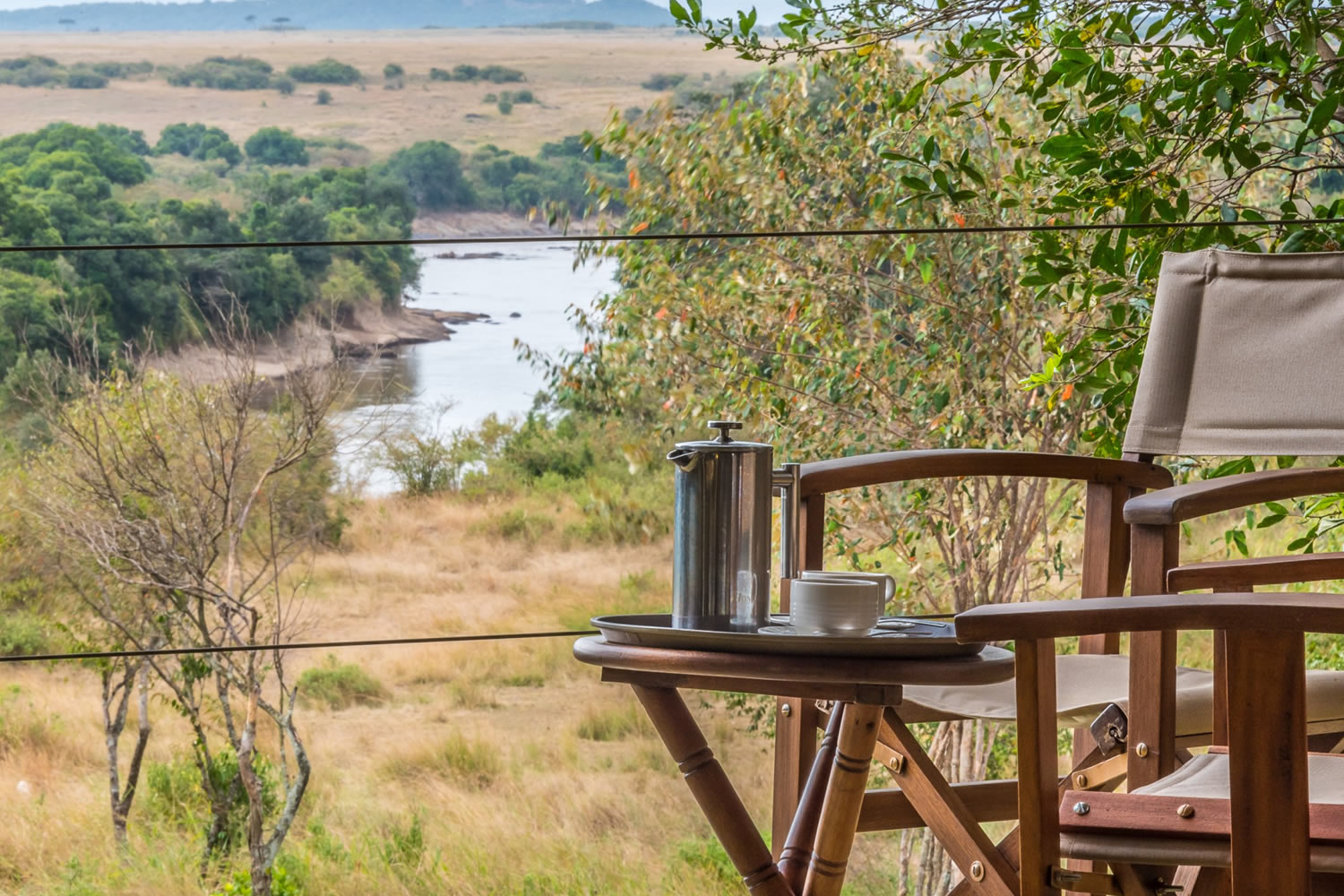
Its position overlooks a primary bend in the Mara River.
Guests can directly observe year-round wildlife activity and the river crossings of the Great Wildebeest Migration.
The camp's design supports immediate access to safari activities, which reduces travel time compared to properties outside the main reserve.
Strategic Location within the Masai Mara Reserve
Entim Mara Camp is situated in a riparian forest on the east bank of the Mara River, a habitat corridor within the Masai Mara National Reserve.
This location provides a view for observing wildlife drawn to the river system.
It is located directly in the path of the annual wildebeest migration between July and October.
The camp’s proximity to major river crossing points means guests are often among the first to witness these events.
The surrounding ecosystem consists of riverine forest, which transitions to open savannah grasslands and acacia woodlands.
These diverse habitats support a density of resident wildlife year-round.
Game drives remain productive throughout the year, regardless of the season.
- Geographical Placement: Located inside the main Masai Mara National Reserve, reducing travel time to key wildlife areas.
- Migration Observation Point: Overlooks a significant section of the Mara River, known for wildebeest crossing points.
- Ecosystem Access: Provides immediate access to riverine forest and open savannah plains, supporting diverse fauna and flora populations.
Luxury Tented Accommodations
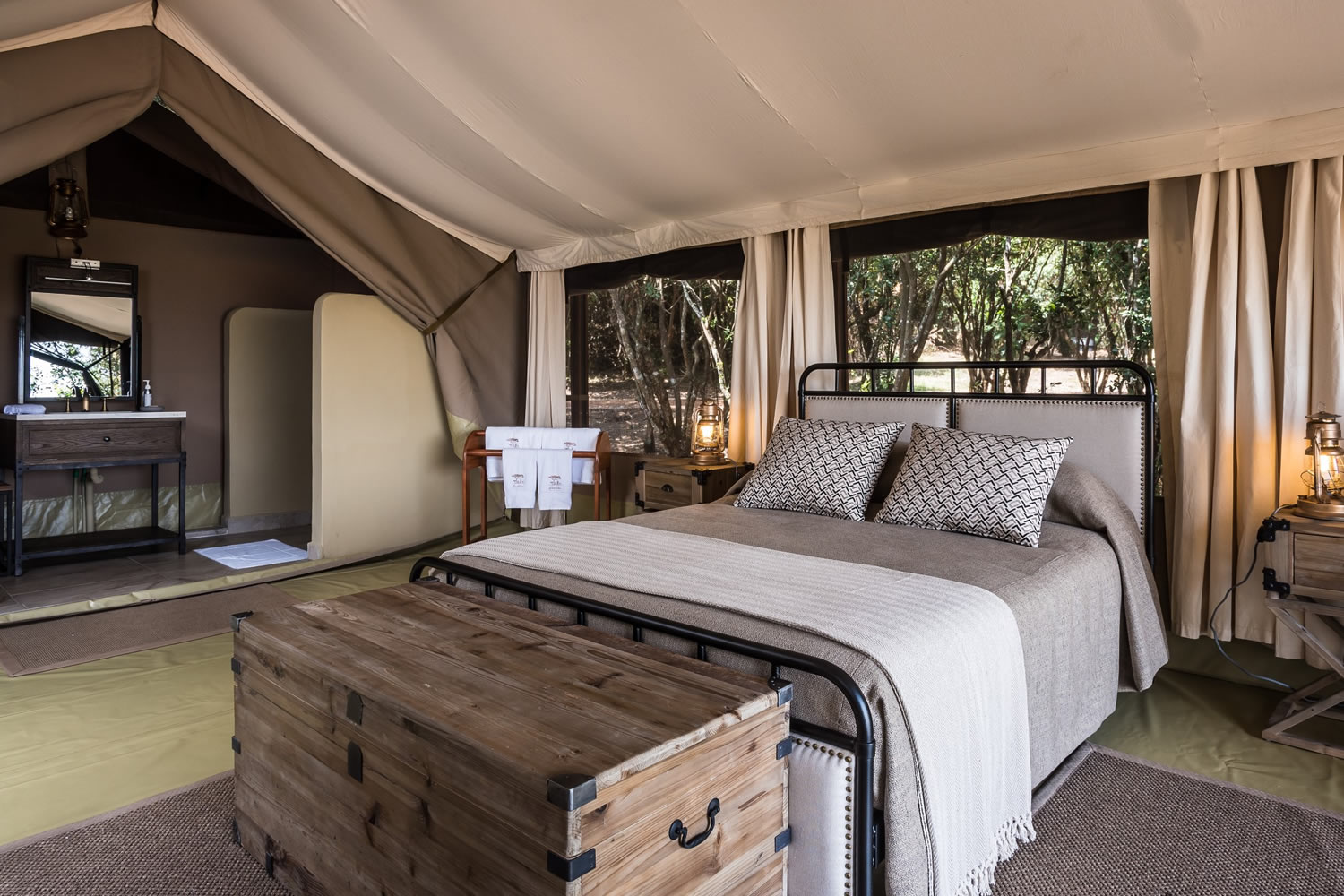
The camp comprises 12 en-suite canvas tents, constructed on elevated wooden platforms to maximise views and ensure safety.
Each tent is spaced to afford privacy and a clear view of the Mara River and the adjacent salt lick, which attracts animals regularly.
The design combines safari aesthetics with comfort, utilising natural materials and an earthy colour palette.
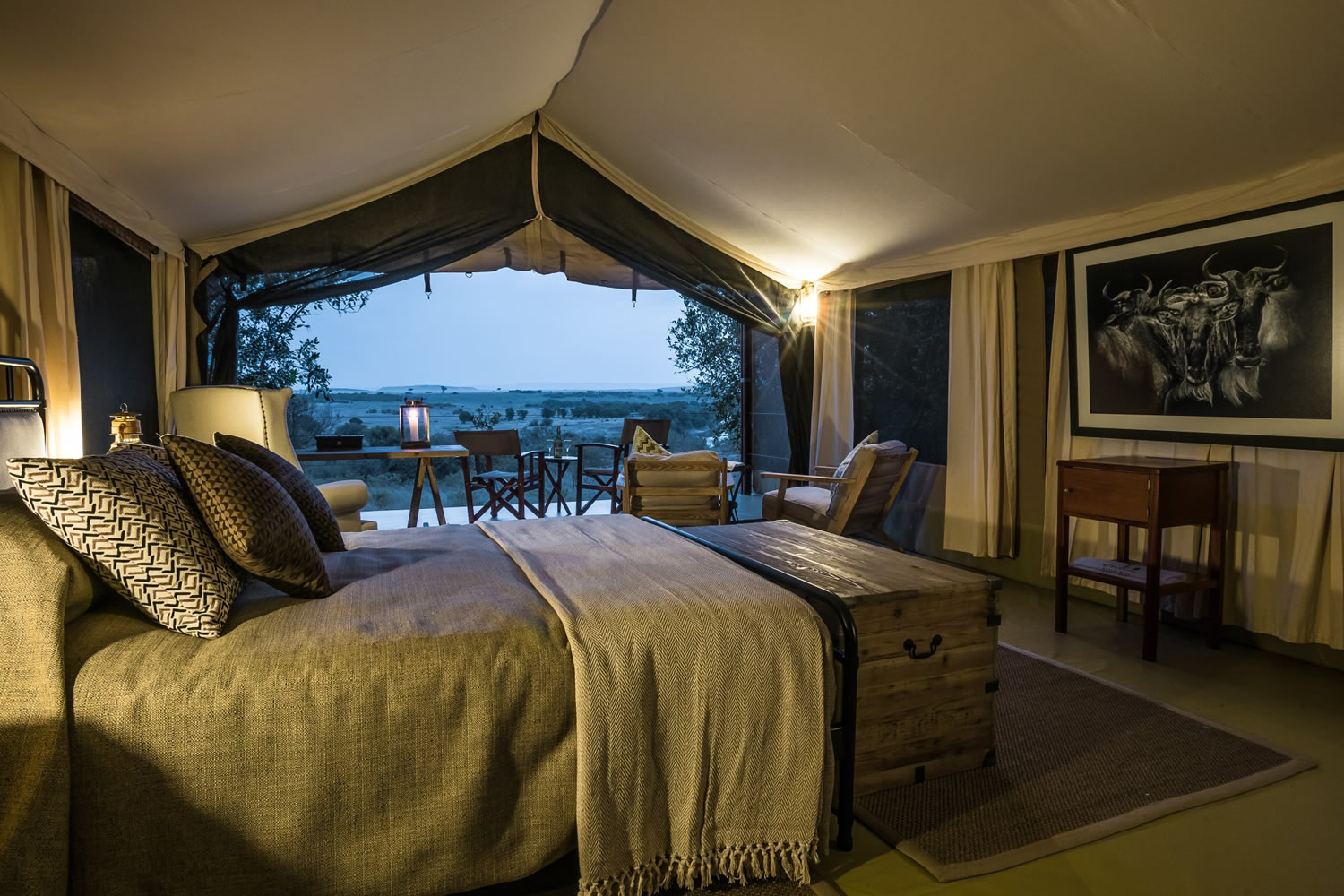
Each tent features a private lounge and veranda.
Guests can observe wildlife directly from their accommodation.
The interiors are spacious, featuring comfortable bedding, a writing desk, and an en-suite bathroom with a hot shower and flush toilet.
Guests experience the bush environment, and essential comforts are maintained.
- Total Tents: 12 en-suite luxury units.
- Architectural Design: Elevated wooden decks with canvas structures for authentic safari feel.
- Private Viewing Decks: Each tent includes a veranda for private, in-room wildlife observation.
- Interior Amenities: Includes en-suite bathrooms, comfortable bedding, and dedicated lounge areas.
Camp Facilities and Guest Services
Entim Mara Camp features facilities designed to support a safari experience, focusing on wildlife photography and guest comfort.
The main communal area is an open-fronted lounge and dining deck.
This area offers extensive views of the surrounding wilderness and allows for wildlife viewing during meals.
A dedicated iMac photo studio is available for guest use.
This provides a space to download, review, and edit images captured during game drives.
For guest safety and to maintain the safari atmosphere, Maasai askaris (warriors) escort guests to and from their tents after dark.
For comfort on cooler evenings, hot water bottles are placed in beds during the turn-down service.
- Main Lounge & Dining: Open-plan area with unobstructed views of the Mara River.
- Photography Studio: An equipped iMac station for digital photo management.
- Maasai Escorts: Warriors provide safe passage for guests around the unfenced camp at night.
- Guest Comfort: Thoughtful amenities include nightly hot water bottles.
Core Safari Activities and Excursions
Activities at Entim Mara Camp are centred on maximising wildlife encounters and providing insights into the Mara ecosystem.
Experienced Maasai guides lead these activities.
Game Drives
Game drives are the principal activity.
These are conducted in the early morning and late afternoon to coincide with peak animal activity.
The camp utilises custom-built, open-sided 4x4 safari vehicles.
These offer optimal viewing and photographic opportunities.
Each vehicle is equipped with charging points for cameras and electronic devices.
The guides are local Maasai with an understanding of the terrain and animal behaviour.
This supports a success rate for spotting the Big Five and other species.
Photographic Safaris
The camp's location and the expertise of its guides make it a suitable destination for amateur and professional photographers.
Guides are trained to position the vehicle for the best light and angles.
They understand the specific needs of wildlife photography.
The on-site photo studio complements this field experience.
Maasai Cultural Visits
Guests have the opportunity to visit a local Maasai homestead (manyatta).
This is a cultural exchange arranged with a neighbouring community.
Visitors can learn about the Maasai's semi-nomadic lifestyle, social structure, and their historical coexistence with wildlife.
This excursion provides context to the safari experience.
Bush Breakfasts and Sundowners
The camp arranges meals and drinks at private locations within the reserve.
Bush breakfasts are served after a morning game drive.
Sundowners involve enjoying drinks and canapés as the sun sets over the savannah.
These experiences are a part of the safari tradition.
Getting to Entim Mara Camp: Logistics and Access
By Air
The most efficient method of travel is by scheduled or chartered light aircraft.
The primary airstrips serving the camp are Keekorok Airstrip (KEU) and Mara Serena Airstrip (MRE).
Both airstrips receive multiple daily flights from Nairobi's Wilson Airport (WIL).
The flight duration is approximately 45-60 minutes.
Upon arrival, guests are met by a camp representative for the transfer to the camp in a 4x4 vehicle, which doubles as a game drive.
By Road
Travel by road from Nairobi is also feasible.
The journey takes approximately 5-6 hours.
The route involves travelling on the main tarmac road to Narok town and onwards to the Sekenani Gate of the Masai Mara National Reserve.
The road to Sekenani Gate is now fully tarmacked, offering a smooth and accessible drive.
From the gate, the final leg to the camp is on all-weather murram roads within the reserve.
Kenya Electronic Travel Authorisation (eTA)
All international visitors to Kenya are required to obtain an Electronic Travel Authorisation (eTA) prior to departure.
The eTA system has replaced the previous visa system.
Applications must be submitted online, and it is recommended to apply at least 72 hours before travel to allow for processing.
2026 Park Fees & Safari Costs for Entim Mara Camp
Visitors should note that all accommodation costs are separate from the mandatory conservation and park entry fees levied by the Kenya Wildlife Service (KWS) and Narok County.
For 2026, the Masai Mara National Reserve falls under the KWS Premium Park category.
These fees are essential for conservation efforts, anti-poaching units, and community development.
Fees are charged per person, per 24-hour period spent within the reserve.
| Category | High Season (July-Dec) | Low Season (Jan-June) |
|---|---|---|
| Adult (Non-Resident) | USD $200 per person/day | USD $100 per person/day |
| Child (Non-Resident) | USD $50 per child/day | USD $50 per child/day |
| Vehicle Entry Fee (per day) | Approx. KES 1,200 (for a 6-seater safari vehicle) | |
Note: Rates are subject to change by government authorities. It is advisable to verify the latest fee structure before travel.
Commitment to Sustainability and Community
Entim Mara Camp operates on a model of low-impact tourism and community partnership.
The camp's small footprint ensures minimal disturbance to the riverine ecosystem.
Eco-friendly practices include solar power for electricity, responsible waste management systems, and water conservation measures.
The camp prioritises employment from the local Maasai community.
This includes guiding and security roles, as well as operational departments such as management, hospitality, and maintenance.
This initiative provides economic support and ensures the benefits of tourism are shared with the traditional custodians of the land.