Karura Forest is a 1,041-hectare gazetted urban forest located in Nairobi, Kenya.
This forest represents one of the largest of its kind globally.
The forest serves as a critical conservation area and a primary public recreation space for the city's residents and visitors.
As of 2026, the management and operations of the forest are fully under the authority of the Kenya Forest Service (KFS).
This mandate involves administering a specific fee structure for all visitor access and activities, ensuring proper funding for forest maintenance.
2026 Karura Forest Entrance Fee Information
The fee system for Karura Forest has been standardised under the Kenya Forest Service (KFS).
This follows a management transition from the Friends of Karura Forest Community Forest Association.
The 2026 fee structure tailors charges based on visitor citizenship and residency status.
It includes separate, clearly defined charges for vehicle parking and optional activities like picnicking and bicycle hire, allowing you to budget effectively for your visit.
All previous annual passes and membership programmes have been suspended indefinitely.
Kenya eTA Requirements for International Visitors
International visitors require a Kenya Electronic Travel Authorisation (eTA) before their journey.
This ensures smooth entry into the country and, subsequently, the forest.
This system has replaced the previous visa-on-arrival process.
Applicants must submit their request online at least 72 hours before travel.
This timeframe ensures sufficient processing, preventing delays in your travel plans.
An approved eTA acts as a mandatory entry requirement for Kenya, streamlining your border crossing process.
Distinction of Karura Forest KFS Entrance Fees
Visitors must note that Karura Forest is managed by the Kenya Forest Service (KFS), not the Kenya Wildlife Service (KWS).
Consequently, Karura's entrance fees are distinct from the '2026 KWS Premium Park Rates' for national parks and reserves.
This distinction prevents confusion regarding applicable charges.
The fee structure detailed herein is specific to KFS-managed forest stations.
It does not align with KWS charges.
Quick Reference Table for Karura Forest Entrance Fees
For efficient planning, the table below provides a summary of the primary fees for accessing Karura Forest in 2026.
All fees are quoted in Kenya Shillings (KES).
Payment is accepted exclusively at the entry gates, streamlining your access.
| Service/Access Type | Category | Rate (KES) |
|---|---|---|
| Daily Entry (Adult) | Citizen / EA Resident | 174 |
| Non-Resident | 850 | |
| Daily Entry (Child) | Citizen / EA Resident | 55 |
| Non-Resident | 450 | |
| Vehicle Parking | Saloon / 4x4 | 295 |
| Picnic Fee (per person) | Adult | 174 |
| Child | 116 | |
| Bicycle Hire | Per 2-hour Slot | 500 |
Detailed Karura Forest Entrance Fee Structure Explanation
The daily entrance fee is a mandatory, one-time charge paid upon entry for a single day of access to the forest.
The rates are set and collected directly by the Kenya Forest Service (KFS) at all official gates.
These gates include Gate A (Limuru Road), Gate C (Kiambu Road), and Gate F (Thigiri Lane).
Karura Forest Entrance Fee Rates for Citizens and EA Residents
This category applies to Citizens of Kenya and official Residents of the East African Community member states.
These states include Burundi, Democratic Republic of Congo, Rwanda, South Sudan, Tanzania, and Uganda.
Valid identification is mandatory for verification.
Presenting this ensures you receive the correct resident or citizen rate.
- Adult Rate: KES 174 per person
- Child Rate (2-12 years): KES 55 per person
Karura Forest Entrance Fee Rates for Non-Residents
This category applies to all international visitors who are not citizens or official residents of the East African Community.
A valid passport is required for verification.
Adult and Child Entrance Fee Categories at Karura Forest
The fee structure distinguishes between adults and children.
The child rate is applicable to individuals aged between 2 and 12 years.
Proof of status, such as a National ID, passport, or resident permit (alien card), is required at the gate.
This proof ensures assignment to the correct fee category, ensuring fair pricing.
Following the management transfer to KFS, all annual pass and membership subscription programmes previously managed by the Friends of Karura Forest (FKF) are suspended.
This includes all individual, family, and corporate passes.
All former pass holders must now pay the standard daily entrance fee.
This aligns everyone with the new management's fee structure.
KFS has not announced a replacement annual pass system.
Additional Costs Beyond Karura Forest Entrance Fees
In addition to the primary entrance fee, separate charges apply for specific services and activities within the forest.
KFS or designated vendors manage these charges.
Daily Parking Fees at Karura Forest
Secure parking is provided at designated areas near the main entrance gates.
This offers peace of mind while you visit.
The fee is charged per vehicle, per day.
Parking for saloon vehicles and 4x4s is charged at KES 295.
Rates for larger vehicles, such as mini-buses or school buses, require confirmation upon arrival at the gate.
Picnic Site Fees at Karura Forest
Picnicking is permitted only within designated picnic sites.
These sites provide suitable facilities for your outdoor meal.
A separate fee is levied for the use of these facilities, in addition to the individual entry fees.
Visitors must confirm the current rates at the gate before proceeding to the picnic areas.
- Adult Picnic Fee: KES 174 per person
- Child Picnic Fee: KES 116 per person
Bicycle Rental Charges at Karura Forest
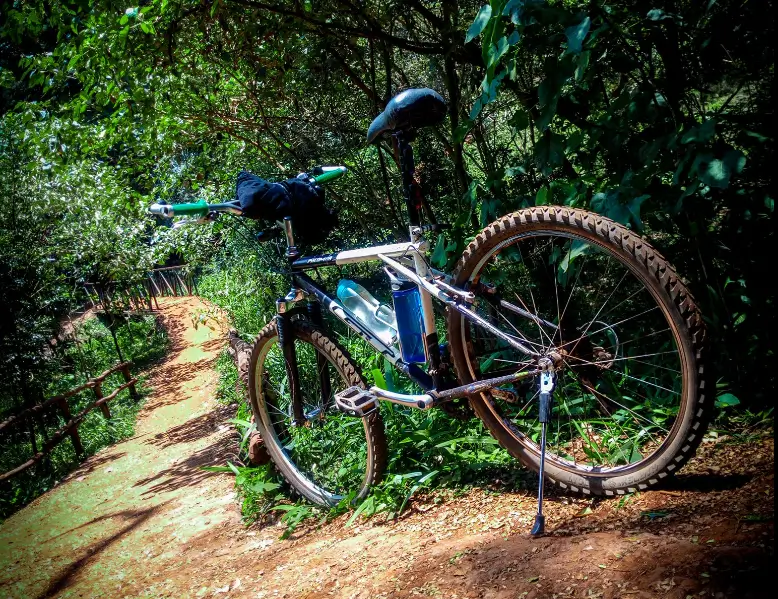
A bicycle hire service operates from a vendor located just inside Gate C on Limuru Road.
The forest features a network of marked trails suitable for cycling.
Only bicycles hired from this official vendor are permitted inside the forest.
This ensures all bicycles meet safety standards for the trails.
- Hire Rate: KES 500 for a two-hour rental period.
- Trail Use: Cycling is restricted to the marked trails to ensure visitor safety and mitigate ecosystem damage.
Dog Walking Policy and Fees at Karura Forest
Karura Forest accommodates dog walking.
The previous annual dog pass system is no longer active.
Dog owners are required to pay their own standard daily entry fee.
This keeps the process simple, with no additional charges for the dog.
The dog itself incurs no separate charge.
- Leash Policy: Dogs must be on a leash at all times, except within specifically designated off-leash zones.
- Health Records: Owners are required to carry current vaccination certificates for their dogs.
Planning Logistics for Your Karura Forest Visit
Effective planning supports a compliant visit.
Adherence to operating hours and regulations is mandatory for all visitors.
Operating Hours for Karura Forest
The forest maintains strict operating hours.
These hours ensure visitor safety and protect the delicate ecosystem.
- Opening Time: 06:00 AM daily.
- Last Entry Permitted: 05:45 PM.
- Exit Time / Gate Closure: All visitors must exit the forest by 07:00 PM.
Accessing Karura Forest Location Details
Karura Forest is accessible via several main gates in Nairobi's northern suburbs.
The primary access points include Gate A on Limuru Road, closest to the KFS headquarters.
Gate C on Kiambu Road hosts the bicycle rental service.
Knowing these locations helps you plan your arrival efficiently.
Both gates are easily reachable by private vehicle or taxi services from the city centre.
Visitor Regulations at Karura Forest
All visitors must adhere to KFS regulations.
Adherence includes staying on marked trails, refraining from littering, and not lighting fires outside of designated areas.
These rules help preserve the forest's natural beauty for all visitors.
The use of single-use plastics is discouraged.
All payments at the gate are processed through digital or mobile money systems.
Cash is not accepted, so plan accordingly by having a mobile payment option ready.
Karura Forest Ecosystem and Features
Karura Forest functions as a vital urban green lung.
It comprises three main types of forest: indigenous upland forest, plantation forest, and a riparian ecosystem.
These ecosystems are found along the Karura, Ruaka, and Gitathuru rivers.
Indigenous Tree Species within Karura Forest
The forest functions as a sanctuary for indigenous flora.
Key tree species include the East African Olive (Olea europaea subsp. cuspidata), Croton megalocarpus, and Vepris bonwickei.
These species are fundamental to the local biodiversity, offering vital habitat and food sources that support the forest's varied wildlife.
Key Trails and Features within Karura Forest
Visitors can use over 50 kilometres of marked trails suitable for walking, running, and cycling.
Significant points of interest within the forest include a 15-metre waterfall and historical Mau Mau caves used during the independence struggle.
The Lily Lake is also a key feature.
The well-maintained trail network provides clear access to these features, allowing for easy exploration.