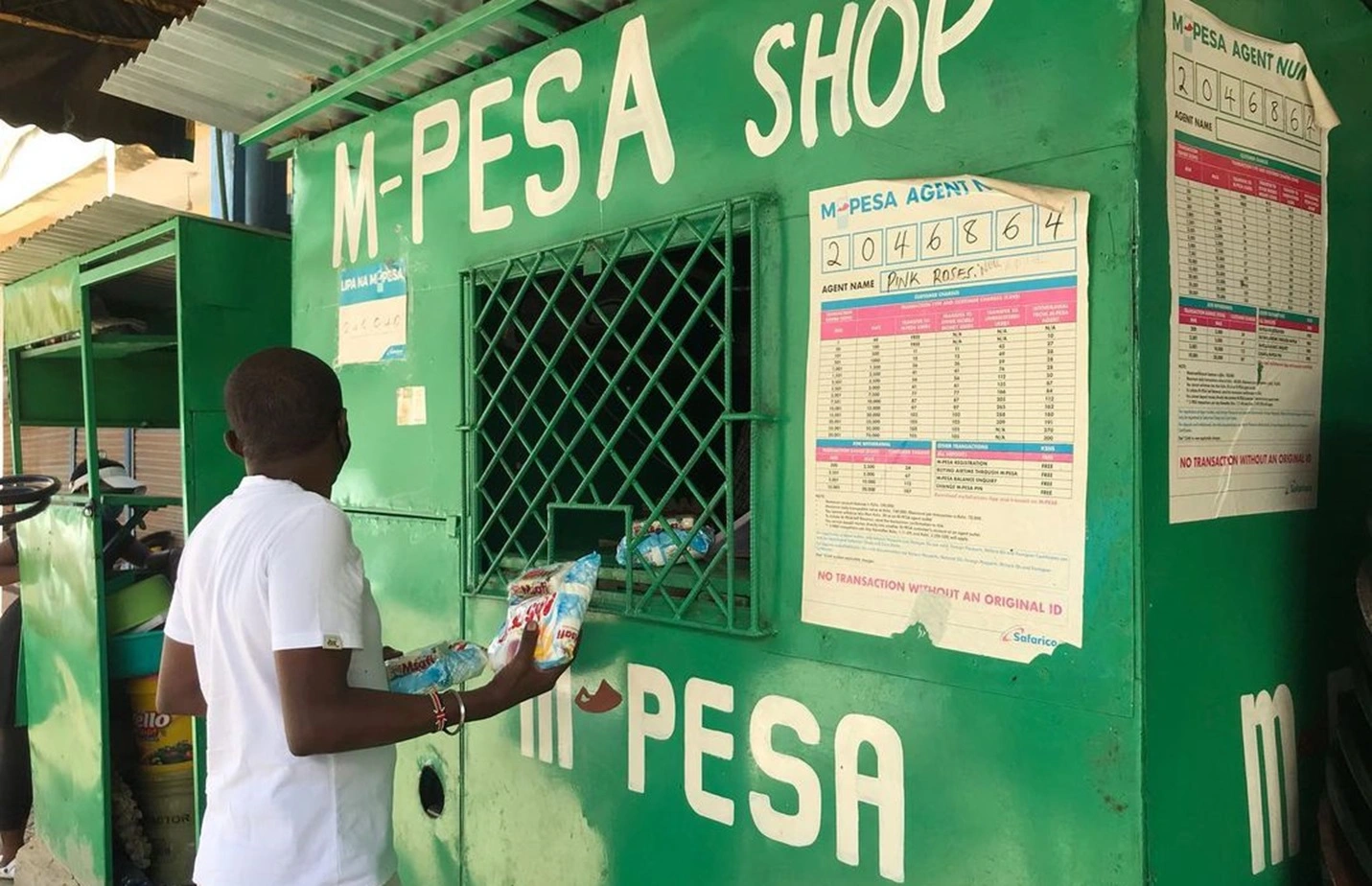
Foreign tourists navigating Kenya's payment options will primarily encounter two methods: Kenyan Shilling (KES) cash and M-Pesa, the dominant mobile money service operated by Safaricom.
Combining both methods provides an efficient travel experience, covering everything from national park entry fees to informal market purchases. Understanding the operational logistics, security protocols, and specific use cases for each is fundamental for effective financial management during a trip.
This guide provides a factual comparison and procedural breakdown for using M-Pesa and cash in Kenya, ensuring tourists can manage transactions efficiently and securely.
|
Aspect |
M-Pesa |
Cash (Kenyan Shillings - KES) |
|
Setup |
Requires Safaricom SIM purchase and registration with a valid passport. |
Requires withdrawal from ATMs or exchange at a bank/forex bureau. |
|
Convenience |
M-Pesa offers widespread acceptance through Lipa Na M-Pesa (Till/Pay Bill), processing payments for both formal businesses and informal transactions with ease. |
Cash remains essential for tipping service staff, making purchases from small roadside vendors, and ensuring payments in areas experiencing poor network coverage. |
|
Safety |
M-Pesa provides high security through PIN protection, removing the need to carry large physical sums of money. This reduces the risk of theft. |
Carrying significant amounts of physical cash inherently poses a theft risk. This requires careful management and vigilance during travel. |
|
Transaction Limits |
KES 250,000 per transaction; KES 500,000 daily limit; KES 500,000 max account balance. |
No transactional limit, but ATM withdrawal limits apply (typically KES 40,000 per transaction). |
|
Usage |
M-Pesa proves ideal for covering costs such as accommodation, restaurant bills, fuel, national park fees, and larger retail purchases. |
Cash becomes necessary for gratuities and for making purchases in highly informal or remote markets, where digital options may not exist. |
|
Fees |
Variable fees apply for sending money and withdrawing. Pay Bill/Till payments are free for the user. |
ATM withdrawal fees and currency exchange commission rates apply. |
|
Integration |
Can link to Kenyan bank accounts (e.g., KCB, NCBA) and receive funds via M-Pesa Global. |
Limited digital integration means physical handling is required for all transactions. |
|
Emergency Use |
M-Pesa enables the rapid receipt of funds from abroad through services like M-Pesa Global, providing a quick financial lifeline. |
Cash access depends on the operational hours and physical locations of banks or ATMs, which can be restrictive. |
Setting Up M-Pesa for Foreign Tourists in Kenya
Acquiring M-Pesa functionality is a straightforward process that begins upon arrival in Kenya.
The service is inextricably linked to a Safaricom SIM card, making it the first required purchase.
M-Pesa SIM Card Registration Requirements
To register for M-Pesa, a foreign tourist must present their original passport at an official Safaricom retail centre or a licensed agent.
Photocopies are not accepted.
The agent will capture your details and a photograph to link the SIM card to your identity, a mandatory legal requirement.
Once the SIM is active, M-Pesa can be activated on the phone's SIM toolkit menu by following the on-screen prompts and setting a secure, four-digit PIN.
Receiving Money with M-Pesa Global
M-Pesa Global is the service arm that facilitates international money transfers directly to a Kenyan M-Pesa account.
Tourists can receive funds from family or from their own international accounts through partners like WorldRemit, Remitly, or Western Union.
The sender requires the recipient's full name and Safaricom phone number.
This provides a secure and rapid method for funding your M-Pesa wallet without carrying large amounts of foreign currency.
M-Pesa Integration with Kenyan Bank Accounts
For extended stays, M-Pesa integrates directly with Kenyan banking services.
Financial institutions such as KCB and NCBA Bank offer products like KCB M-Pesa and M-Shwari. These services link directly to an M-Pesa wallet.
This allows for higher-value fund management, enabling transfers from a bank account to M-Pesa for daily use while keeping the bulk of funds secured in the bank.
Using M-Pesa for Payments in Kenya
The primary mechanism for merchant payments is "Lipa Na M-Pesa" (Pay with M-Pesa).
This system operates through two distinct channels: Till Numbers for direct merchant payments and Pay Bill Numbers for corporate or utility billing.
Lipa Na M-Pesa Till Number Payments
A Till Number is a direct merchant payment code used by shops, restaurants, fuel stations, and smaller vendors.
To pay, the user selects "Lipa Na M-Pesa," then "Buy Goods and Services," enters the merchant's Till Number, the amount, and their M-Pesa PIN.
The transaction is instantaneous. Both parties receive a confirmation SMS. Payments to a Till Number are free of charge for the customer.
Lipa Na M-Pesa Pay Bill Services
A Pay Bill Number is used by larger organisations to collect payments, including government bodies like the Kenya Wildlife Service (KWS) for park fees.
The process involves selecting "Lipa Na M-Pesa," then "Pay Bill." The user enters the business's Pay Bill Number, an account number (which could be a booking reference, invoice number, or your name), the amount, and their PIN.
This is the standard method for settling safari lodge bills or paying for pre-booked services.
Daily M-Pesa Transactions for Tourist Spending
For tourists, M-Pesa serves as a central tool for daily expenses.
It provides payment for ride-hailing services like Uber or Bolt, allows settlement of restaurant bills, and covers grocery purchases in supermarkets and fuel payments. Its widespread adoption enables tourists to manage the majority of expenditures without needing physical cash.
Cash Essentials for Foreign Tourists in Kenya
Despite M-Pesa's dominance, Kenyan Shilling cash remains indispensable in specific contexts.
Tourists should plan to carry a modest amount of cash for situations where digital payments are impractical or not accepted.
Cash Requirements in Remote Kenyan Areas
In certain remote areas, particularly at community-run conservancies or isolated eco-lodges, network connectivity can be unreliable. This renders M-Pesa terminals inoperable.
Small, community-based enterprises like craft markets or local guides in these regions may not have M-Pesa merchant accounts and operate exclusively on a cash basis.
Cash Payments for Informal Vendors and Tipping
Cash is the required currency for transactions with many informal vendors.
This includes purchasing produce at roadside stalls, buying souvenirs from street hawkers, and paying for services in open-air markets.
Tipping is another critical area where cash is the established norm. Guides, drivers, hotel porters, and restaurant staff should be tipped in Kenyan Shillings.
Transaction Limits for Cash and M-Pesa for Foreign Tourists
Understanding transaction ceilings is crucial for managing safari payments, accommodation bills, and daily spending.
Daily Transaction Limits for M-Pesa
The Communications Authority of Kenya and the Central Bank of Kenya regulate M-Pesa limits.
As of 2026, the standard limits are:
- Maximum Account Balance: KES 500,000
- Maximum Transaction Value: KES 250,000
- Total Daily Transaction Limit: KES 500,000
These limits are sufficient for most tourist activities but may require planning for larger payments.
Managing Large Payments as a Foreign Tourist
For expenses exceeding KES 250,000, for example a multi-day luxury safari package, payment requires a structured approach.
Options include making multiple M-Pesa payments over consecutive days, using a credit card (which is widely accepted at high-end establishments), or arranging a direct bank transfer in advance.
It is advisable to settle large bills with the safari operator or hotel prior to the service date to avoid logistical complications.
Logistics and Entry for Foreign Tourists in Kenya
All foreign visitors must plan their entry documentation and be aware of associated costs, which are often payable via digital means.
The Electronic Travel Authorisation (eTA) Application Process
As of 2026, the visa system has been replaced by the Electronic Travel Authorisation (eTA).
All foreign nationals, except for specific exempt countries, must apply for an eTA online before departure.
The application requires passport details, travel itinerary, and accommodation proof.
The standard processing window is 72 hours, and it is mandatory for boarding a flight to Kenya.
2026 Entry Fees and Costs for Foreign Tourists in Kenya
Visitors planning safaris must budget for statutory park entry fees, which are set by the Kenya Wildlife Service (KWS).
Kenya Wildlife Service (KWS) Premium Park Rates for 2026
For premium parks such as Amboseli, Lake Nakuru, and the Mara Reserve, the 2026 KWS park fees for non-resident adults represent a key cost component.
These fees are payable per 24-hour period and are strictly enforced.
Tourists must confirm the exact rates applicable at the time of their travel, as they are subject to change.
Accepted Payment Methods for Park Entrance Fees
KWS has implemented a cashless payment policy at all park gates.
Entry fees must be paid digitally via M-Pesa (using a Pay Bill number), credit card, or debit card.
Physical cash is not accepted for park entry fees.
Payment Security for Cash and M-Pesa for Foreign Tourists
Both payment methods carry inherent risks that require vigilance and adherence to security best practices.
Identifying Common M-Pesa Scam Tactics
Users must be aware of social engineering scams, though the M-Pesa system itself is secure.
A common tactic is the "wrong number" scam. Here, a fraudster sends M-Pesa funds "by mistake" and then calls, pleading for the user to send the money back.
The initial transaction is then reversed, leading to a loss of the money sent.
Never send money back; instruct the caller to contact Safaricom directly to resolve the issue.
Recognising Fake Safaricom Customer Care Calls
Be wary of unsolicited calls from individuals claiming to be from Safaricom customer care.
They might ask for your PIN or other personal details to "fix" an issue with your account. Safaricom will never ask for your M-Pesa PIN.
All official communication comes through designated channels.
Recognising Cash Scams in Kenyan Tourist Areas
Tourists may encounter scams when handling cash, such as inflated pricing for goods or services.
Always agree on a price before consumption. At markets, remain aware of the "switcheroo" scam.
Here, a vendor might switch a high-quality item inspected for a lower-quality one during bagging. Additionally, exchange currency only at reputable banks or licensed forex bureaus.
This avoids counterfeit notes and unfair rates.
Recommendations for Foreign Tourists in Kenya
For an efficient and secure trip, a hybrid approach to payment is optimal.
Optimal Payment Strategy for Tourists in Kenya
Upon arrival, set up M-Pesa for the majority of your transactions. This includes accommodation, restaurant meals, fuel, and park fees.
Simultaneously, withdraw a manageable amount of Kenyan Shillings from an ATM (e.g., KES 10,000 - 20,000) to cover tips, small market purchases, and any potential network outages.
Replenish your cash reserve as needed from ATMs in major towns.
Key Considerations for Money Management
- Activate M-Pesa Immediately: Make acquiring and registering a Safaricom SIM card your first priority upon arrival.
- Prioritise Digital for Major Bills: Use M-Pesa or a credit card for all significant expenses like park fees and hotels.
- Use Cash for Gratuities: Carry small denominations of KES for tipping and informal vendors.
- Verify All Transactions: Double-check M-Pesa Till/Pay Bill numbers and amounts before entering your PIN. Count your change carefully during cash transactions.
- Maintain Security: Safeguard your M-Pesa PIN and remain sceptical of unsolicited calls or messages regarding your account.