Using M-Pesa as a tourist provides a secure and highly efficient method for managing financial transactions in Kenya.
M-Pesa is a mobile money transfer service operated by Safaricom, Kenya's largest telecommunications provider.
Its system integrates deeply into the national economy, providing you with the ability to send and receive money, pay for goods and services, and manage your funds directly from your mobile phone, much like a local.
Understanding the M-Pesa Service
Launched in 2007 by Safaricom, M-Pesa (M for mobile, Pesa is Swahili for money) is a transformative mobile banking service.
It allows users to store value in a digital account linked to their Safaricom phone number.
The platform's core functions include depositing, withdrawing, and transferring funds, alongside paying for goods and services at merchant outlets (Lipa na M-Pesa).
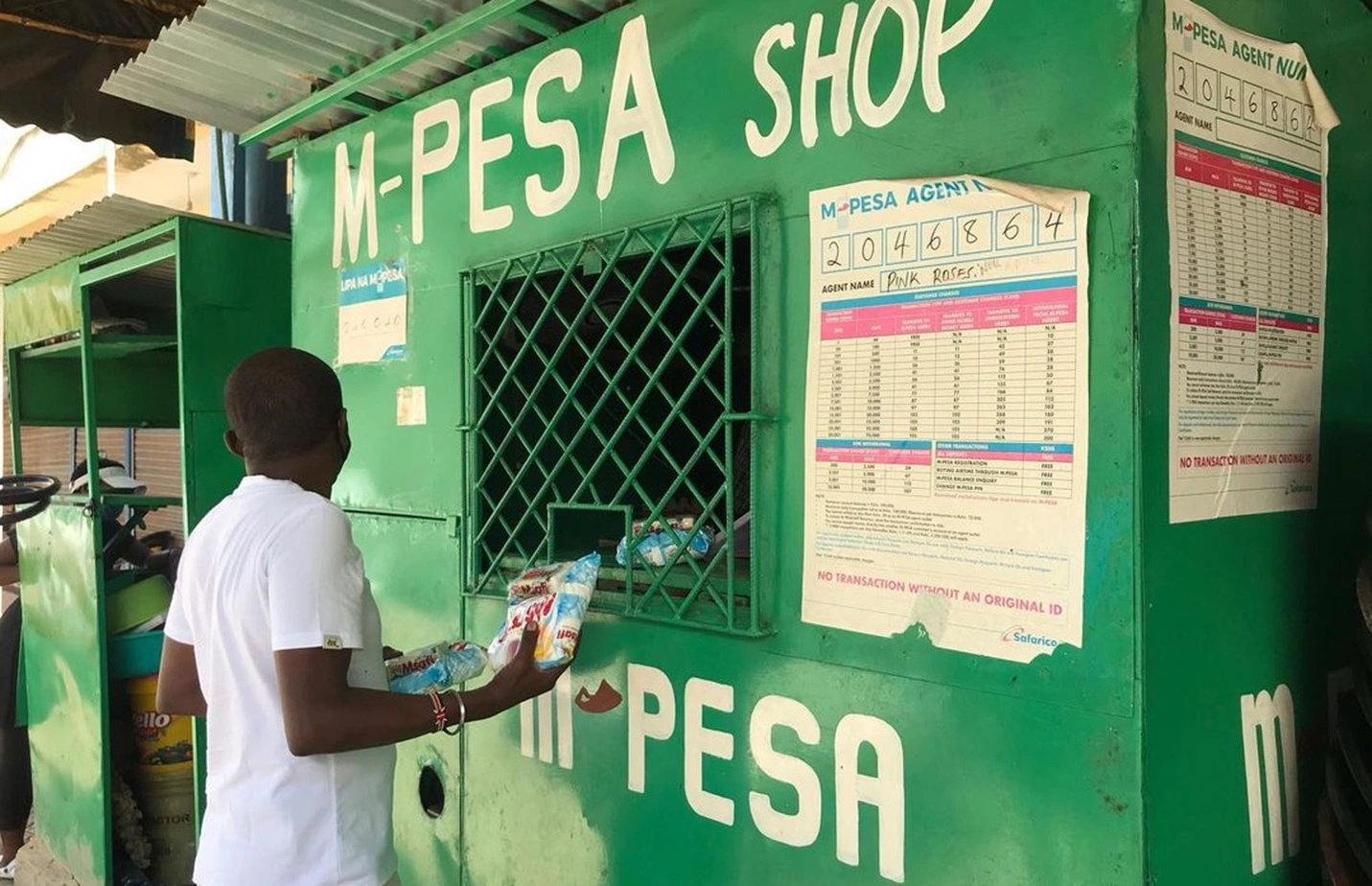
Its extensive agent network, exceeding 260,000 locations, ensures its accessibility even in remote regions of Kenya where traditional banking infrastructure is sparse.
Advantages of M-Pesa for Tourists
For international visitors, M-Pesa offers significant logistical advantages over carrying large amounts of cash or relying solely on international credit cards.
The system's primary benefits are security, convenience, and near-universal acceptance throughout Kenya.
- Security: Every transaction is safeguarded by your unique Personal Identification Number (PIN). This security measure significantly reduces the risks linked to carrying physical cash, such as theft. Even if your phone is misplaced, your M-Pesa account remains protected, provided your PIN stays confidential.
- Convenience: You can make instant payments to vendors, tour guides, lodges, and shops without the hassle of needing physical currency or locating card terminals. This ease of payment becomes especially valuable in rural areas, bustling local markets, and for smaller transactions where traditional card acceptance is often limited.
- Accessibility: The extensive network of M-Pesa agents ensures you can easily deposit or withdraw cash across Kenya, from the moment you arrive at international airports to exploring even the smallest rural towns.
Getting Started Using M-Pesa as a Tourist in Kenya
The registration process for M-Pesa is a mandatory, in-person procedure.
It is designed for security and compliance with Kenyan financial regulations.
It requires specific documentation and the purchase of a local SIM card.
M-Pesa Registration Process
To register for an M-Pesa account, a tourist must first acquire a Safaricom SIM card.
These are available at official Safaricom retail centres, authorised dealer shops, and dedicated kiosks at major international airports like Jomo Kenyatta International Airport (NBO) in Nairobi.
- Visit a Safaricom Outlet: Locate an official Safaricom shop or a registered agent. Airport kiosks are the most convenient option upon arrival.
- Provide Identification: Present your original passport. Photocopies or other forms of ID are not accepted for foreign nationals. This is a legal requirement for SIM card registration in Kenya.
- Purchase and Register the SIM Card: The agent will capture a photograph of you and a scan of your passport's bio-data page to link to the new phone number. The SIM card itself has a nominal cost, typically around KES 100-200.
- Request M-Pesa Registration: Inform the agent you require M-Pesa activation on the new line. They will guide you through the M-Pesa registration form.
M-Pesa Account Activation Steps
Once the SIM card is registered in your name, the agent will initiate the M-Pesa activation process.
You will be required to set your four-digit M-Pesa PIN.
- Initial Activation: The agent activates the M-Pesa service. You will receive an SMS from Safaricom with a start key or initial PIN.
- Access the Menu: On your phone, dial the USSD code *334# to access the main M-Pesa menu.
- Set Your PIN: Select the option to activate or change your PIN. You will be prompted to enter the start key sent via SMS, and then you can create your new, confidential four-digit PIN. Choose a number that is not easily guessable (e.g., avoid "1234" or your year of birth).
- Confirmation: Upon successful PIN setup, you will receive a confirmation SMS from M-Pesa, verifying that your account is active and ready for use.
Post-Activation Expectations for Your M-Pesa Account
Immediately after activation, your M-Pesa account is operational.
It is advisable to conduct a small initial transaction, such as checking your balance, to familiarise yourself with the USSD menu.
The balance will initially be KES 0.00 until you deposit funds.
Keep the confirmation SMS for your records.
You must keep your M-Pesa PIN confidential. Sharing it with anyone, including individuals claiming to be from Safaricom, compromises your account security.
Methods for Funding Your M-Pesa Account as a Tourist in Kenya
Once your M-Pesa account is active, the next step is to load it with Kenyan Shillings (KES).
Tourists have several methods available to convert foreign currency into M-Pesa funds.
Depositing Foreign Currency at M-Pesa Agent Locations
Standard M-Pesa agents do not directly exchange foreign currency.
However, you can use adjacent Forex Bureaus to convert USD, EUR, GBP, or other major currencies into KES.
Once you have the KES cash, you can deposit it at any M-Pesa agent.
- Exchange foreign currency for Kenyan Shillings at a registered Forex Bureau.
- Visit any M-Pesa agent (identifiable by M-Pesa branding).
- Inform the agent you wish to make a deposit ("Weka Pesa").
- Provide the agent with your phone number and the cash amount.
- The agent will process the transaction. You will receive an SMS notification confirming the deposit into your M-Pesa account. Verify the amount before leaving the agent.
M-Pesa Services at Airports and Tourist Hubs
Forex Bureaus and M-Pesa agents are widely available at international airports such as Jomo Kenyatta International Airport (NBO) and Moi International Airport (MBA).
These provide the most direct method for funding your account immediately upon arrival in Kenya.
Linking International Payment Cards to M-Pesa
Safaricom, in partnership with services like PayPal, allows for linking international accounts to M-Pesa.
Tourists can link their PayPal account to their M-Pesa wallet, enabling them to top up their M-Pesa balance from their PayPal funds.
This requires setting up the link through the dedicated PayPal Mobile Money service portal.
M-Pesa Global for Receiving International Remittances
M-Pesa Global is a service that allows for international money transfers.
A tourist can have family or friends send money from abroad directly to their Kenyan M-Pesa account using partners like Western Union, WorldRemit, or Remitly.
The sender initiates the transaction from their home country, and the funds are deposited directly into the recipient's M-Pesa wallet in KES.
Understanding M-Pesa Related Currency Exchange Rates
When funding your M-Pesa account with foreign currency, the transaction involves two stages: currency exchange and M-Pesa deposit.
The exchange rate is determined by the Forex Bureau, not by Safaricom.
It is standard practice to check the offered rate and any commission fees before exchanging a large sum.
Rates at airports may be less favourable than those in city centres.
Typical Tourist Uses for M-Pesa in Kenya
M-Pesa integrates into nearly every aspect of the Kenyan economy, offering tourists a versatile payment tool for a wide range of goods and services.
Sending Funds to Other M-Pesa Users
This function is useful for paying individuals such as local guides, drivers, or small-scale vendors who are registered M-Pesa users.
- Dial *334# and select 'Send Money'.
- Enter the recipient's Safaricom phone number.
- Enter the amount in KES.
- Enter your M-Pesa PIN to authorise the transaction.
- Both you and the recipient will receive an SMS confirmation.
Paying Bills and Services Using M-Pesa
The 'Lipa na M-Pesa' (Pay with M-Pesa) service is used for merchant payments.
There are two primary methods: 'Pay Bill' and 'Buy Goods and Services'.
- Pay Bill: Used for payments to larger organisations (e.g., utility companies, safari lodges, airlines). It requires a Business Number and an Account Number (e.g., your booking reference or invoice number).
- Buy Goods and Services: Used for payments at smaller retail outlets, restaurants, fuel stations, and craft markets. It requires a Till Number, which is typically displayed at the point of sale.
Purchasing Airtime with M-Pesa
You can directly purchase Safaricom airtime (credit) for your phone or another number using your M-Pesa balance.
This transaction is typically free of charge and is processed instantly.
M-Pesa Applications in Specific Tourist Scenarios
Paying Park Entrance Fees Using M-Pesa
Kenya Wildlife Service (KWS) operates on a cashless payment system at all national park gates.
M-Pesa is a primary accepted payment method.
You can pay directly at the gate using the provided Pay Bill or Till Number.
M-Pesa for Accommodation Settlement
Many safari lodges, tented camps, and hotels, particularly those outside major cities, accept M-Pesa for settling bills.
It is advisable to confirm this payment option during booking.
M-Pesa Payments for Tour Operators and Guides
Paying local tour operators, safari guides, and drivers via M-Pesa is a common and convenient practice.
It eliminates the need to carry large cash amounts for final payments or tips.
M-Pesa at Local Markets and for Street Vendors
In markets (e.g., Maasai Market), many individual vendors have personal or merchant M-Pesa accounts.
This allows for secure, cashless transactions when purchasing crafts, souvenirs, and other goods.
Tipping Staff Through M-Pesa
Tipping guides, drivers, and lodge staff can be done efficiently via M-Pesa.
It is a discreet and secure way to show appreciation for service, particularly when you do not have the correct amount of cash.
M-Pesa Transaction Fees for Tourists in Kenya
M-Pesa operates on a tariff-based system where fees are charged for certain transactions.
These fees are regulated and publicly available.
Understanding this structure is key to managing costs.
Fee Structure for Sending M-Pesa Funds
A graduated fee applies when sending money to other M-Pesa users.
The fee increases with the amount being sent.
Transactions below KES 100 are often free to encourage small-scale use.
Sending larger amounts incurs a higher, yet still modest, fee compared to traditional banking.
Fee Structure for Withdrawing M-Pesa Funds
Withdrawing cash from an M-Pesa agent incurs a fee.
This fee is also on a sliding scale based on the amount being withdrawn.
It is generally more cost-effective to withdraw larger sums less frequently than to make multiple small withdrawals.
M-Pesa Tariff Guide Updates for 2026
Safaricom periodically updates its M-Pesa tariff guide.
For 2026, tourists should verify the current fee structure upon arrival.
The 'Tariff Query' option within the M-Pesa menu can be used to check the cost of a transaction before confirming it with your PIN.
Using the M-Pesa App and USSD for Tourists
Transactions can be initiated via two primary interfaces: the M-Pesa App (part of the MySafaricom app) and the USSD menu (*334#).
Each has distinct advantages for a tourist.
Advantages of the M-Pesa App for Tourists
The M-Pesa App offers a graphical user interface that is more intuitive than the text-based USSD menu.
It provides a clear transaction history, simplifies payments by allowing QR code scanning for Till Numbers, and makes managing your account straightforward.
Requirements for M-Pesa App Functionality
The M-Pesa App requires a smartphone (iOS or Android) and an active internet connection (mobile data or Wi-Fi) to function.
The app can be downloaded from the respective app stores once your Safaricom SIM card is active.
M-Pesa USSD for Offline Transaction Capability
The USSD service, accessed by dialling *334#, is the backbone of M-Pesa.
Its primary advantage is that it does not require an internet connection.
It functions on any mobile phone, as long as there is a basic network signal, making it highly reliable in remote safari locations where internet access may be intermittent or unavailable.
M-Pesa Internet Requirements for App Versus USSD
Choose the M-Pesa App when you have a reliable internet connection for a better user experience.
In remote areas or to conserve mobile data, revert to the USSD menu (*334#) for all transactions.
Both methods are equally secure.
M-Pesa Global for Tourists Receiving Funds
M-Pesa Global is the international money transfer arm of the M-Pesa service.
This service is highly beneficial for tourists needing to receive funds from their home country during their travels.
How M-Pesa Global Functions for Tourists
The service enables M-Pesa users in Kenya to send and receive money from a global network of partners.
For a tourist, the key function is receiving funds.
The sender does not need an M-Pesa account; they use a partner service (like Western Union, WorldRemit, Ria) in their country to send money to the tourist's Kenyan Safaricom phone number.
Receiving International Funds with M-Pesa Global
The process is initiated by the sender.
They specify the recipient's name and Safaricom phone number.
The funds are then converted to KES and deposited directly into the tourist's M-Pesa account.
A confirmation SMS is sent upon successful deposit, making the funds instantly available for use in Kenya.
M-Pesa Troubleshooting and Support for Tourists
While the M-Pesa system is robust, tourists should be aware of procedures for common issues and how to access customer support.
Procedure for a Lost Safaricom SIM Card
If you lose your phone or SIM card, you must visit an official Safaricom retail centre immediately with your original passport.
You can request to block the old SIM card to secure your M-Pesa account.
A SIM-swap procedure will be performed, allowing you to retain your phone number and M-Pesa account on a new SIM card.
Your M-Pesa balance will be preserved.
Accessing English-Speaking M-Pesa Customer Support
Safaricom offers comprehensive customer support in English.
The primary contact methods are:
- Phone Support: Dial 100 from your Safaricom line for prepaid customer service or 200 for postpaid. These lines are free to call.
- Retail Centres: Visit any official Safaricom shop for in-person assistance with M-Pesa issues, SIM swaps, or registration queries. Staff are trained to assist international visitors.
Essential Logistics for Tourists Using M-Pesa
Planning the logistical aspects of using M-Pesa ensures a smooth experience from arrival to departure.
Acquiring a Safaricom SIM Card in Kenya
Purchase a SIM card only from official Safaricom outlets or authorised dealers.
Avoid street vendors for SIM registration.
The process is quick and efficient at airport kiosks, which are accustomed to registering foreign nationals.
Estimated 2026 SIM Card Cost for M-Pesa Tourists
For 2026, the estimated cost of a new Safaricom SIM card remains minimal, typically between KES 100 and KES 200.
This is a one-time purchase fee for the physical card; you will then need to load airtime or data bundles separately.
Comparison of M-Pesa with Other Tourist Payment Methods
A balanced approach to payments is often the most effective strategy for tourists in Kenya.
Each method has specific advantages and limitations.
| Payment Method | Advantages | Disadvantages | Best Use Case |
|---|---|---|---|
| M-Pesa | Universally accepted, highly secure (PIN-protected), low transaction fees, works without internet (USSD). | Requires a local SIM and in-person registration, account funding process. | Daily expenses, tips, local markets, park fees, payments in remote areas. |
| International Credit/Debit Cards | Widely accepted in major hotels, upscale restaurants, and large supermarkets. Direct payment from your home bank. | Smaller vendors or rural locations often do not accept international cards. There is a potential for high foreign transaction fees charged by your home bank. Additionally, a risk of card skimming exists in some locations. | Large payments at established businesses like major hotels, airlines, and safari lodges. |
| Cash (KES) | Accepted everywhere for small transactions. No technology required. | Carrying large amounts of cash presents a higher risk of theft. It can also be cumbersome to manage. You will always need to perform a currency exchange beforehand. | Very small purchases where no other method is available, or as a backup. |
2026 M-Pesa Transaction Fees and Costs for Tourists
All transaction costs are subject to official tariffs.
Tourists should familiarise themselves with the prevailing rates for the services they intend to use frequently, such as withdrawals and person-to-person transfers.
Updated M-Pesa Transaction Fees for 2026
As of 2026, all M-Pesa fees are determined by Safaricom's official tariff guide.
These are subject to change.
Before authorising any payment, M-Pesa displays the transaction amount and the associated fee for your approval.
This transparency allows you to confirm costs before committing.
Always check the latest tariffs on the official Safaricom website or via the M-Pesa menu upon arrival.
Other Potential M-Pesa Related Costs for 2026
Beyond transaction fees, there are no recurring account maintenance charges for a standard M-Pesa account.
The primary costs are the fees for sending and withdrawing money.
Payments made via 'Lipa na M-Pesa' (Pay Bill or Buy Goods) are typically free for the customer, as the merchant bears the transaction cost.