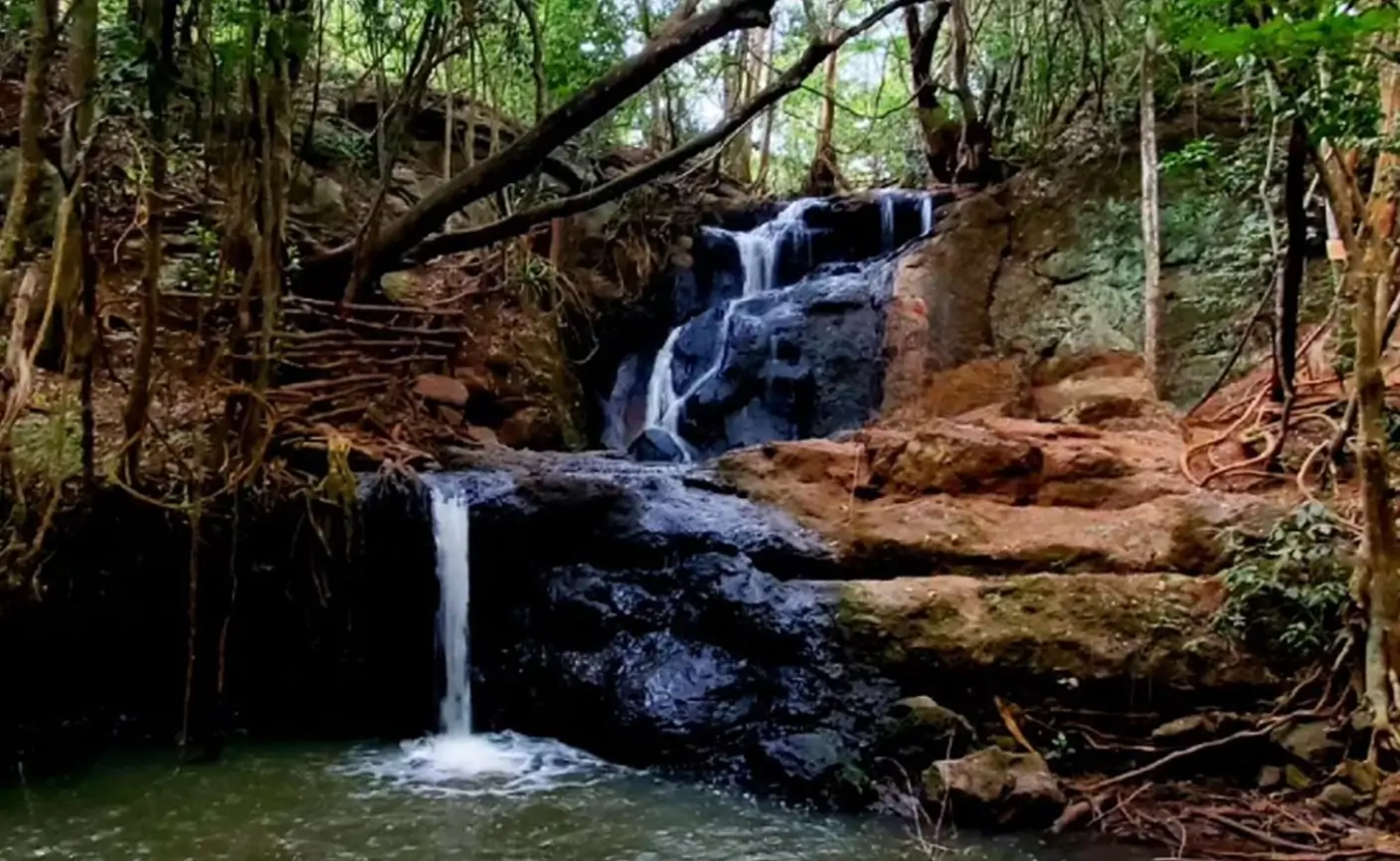
The Karura Forest Waterfalls are a significant geological feature located within Nairobi's Karura Forest Reserve.
Fed by the Karura River, the main waterfall has a drop of approximately 15 metres and is situated near the forest's Mau Mau caves.
It serves as a primary destination for visitors navigating the forest's extensive trail network.
Key Characteristics of Karura Forest Waterfalls
The waterfalls exist within one of the largest urban gazetted forests in the world. They offer a distinct natural attraction accessible within a major city.
The water's colour changes seasonally. During the rainy seasons, high levels of red soil sediment from upstream create a notable orange-brown flow.
Managed jointly by the Kenya Forest Service (KFS) and the Friends of Karura Community Forest Association (FKF), this collaboration upholds conservation standards and trail maintenance.
Seasonal Influences on Karura Forest Waterfalls Visits
The volume and appearance of the waterfall are directly influenced by seasonal rainfall.
Each period offers a different logistical consideration for visitors.
- Peak Flow (March–May & October–December): During the two rainy seasons, the waterfall is at its most powerful. The water carries significant sediment, resulting in a distinct orange colour. Trails may be muddy, requiring appropriate footwear.
- Dry Season (January–February & June–September): The water flow is calmer and clearer. The trails are dry and firm, making this period optimal for leisurely walks and family visits. The area is less crowded, particularly on weekdays.
Karura Forest Operating Hours
Karura Forest maintains strict operating hours to ensure visitor safety and protect the ecosystem.
All visitors must exit the forest by the designated closing time.
- Opening Time: 06:00 AM daily.
- Closing Time: All visitors must exit by 06:00 PM. The last entry is typically permitted around 05:00 PM.
Planning Your Karura Forest Waterfalls Visit
A successful visit requires logistical preparation. This covers entry fees, gear, and adherence to forest regulations.
These elements are managed by the KFS and FKF to maintain the facility.
Practical Advice for Karura Forest Waterfalls Visits
- Arrive Early: To avoid queues at the entrance gates, especially on weekends and public holidays, plan to arrive at or shortly after the 06:00 AM opening time.
- Visit on Weekdays: For a more tranquil experience with fewer people, a weekday visit is recommended.
- Use Guided Tours: Official KFS-accredited guides are available for hire. They provide detailed information on the forest's ecology, history, and biodiversity, enhancing the educational value of the visit.
- Check Official Updates: Before your visit, consult the official Friends of Karura Forest website for any alerts regarding trail closures or specific events.
What to Bring for Your Karura Forest Waterfalls Visit
- Footwear: Sturdy, closed-toe walking shoes with good grip are mandatory. The terrain near the waterfall includes uneven paths and potentially slippery rocks.
- Water: A reusable water bottle is essential. Visitors must bring their own potable water, as it is not available along the trails.
- Payment Method: Entry fees are payable exclusively via mobile money (M-Pesa) or card.
- Navigation: Download a map of the Karura Forest trails from the FKF website or take a photograph of the map boards at the entrance.
- Optional Items: Insect repellent, sunscreen, binoculars for birdwatching, and a camera.
Safety and Etiquette in Karura Forest
- Stay on Marked Trails: Do not venture off the designated paths. This is for your safety and to prevent erosion and disturbance to the ecosystem.
- Wildlife Interaction: Maintain a safe distance from all wildlife, including Sykes' monkeys. Do not feed any animals.
- Waste Disposal: Carry out all your rubbish. Bins are provided at the entrance gates and the KFEET centre, but the principle of 'leave no trace' is enforced.
- Noise Levels: Keep noise to a minimum to avoid disturbing wildlife and other visitors. The use of radios or speakers is prohibited.
2026 Karura Forest Entry Fees
The Kenya Forest Service (KFS) sets entry fees.
These fees are crucial for the maintenance and conservation of the forest.
The fee structure differentiates between Kenyan Citizens, East African Residents, and Non-Residents (International Visitors).
All payments are cashless.
| Category | Adult Fee (KSh) | Child Fee (KSh) |
|---|---|---|
| Kenyan Citizens | KSh 100 | KSh 50 |
| East African Residents | KSh 200 | KSh 100 |
| Non-Residents (International) | KSh 600 | KSh 300 |
Payment Methods for Karura Forest Visit
Payment for entry is processed exclusively through non-cash methods.
Visitors must ensure they have a functional mobile money account or a debit/credit card before arriving at the gate.
- Mobile Money: M-Pesa is the primary method of payment. Paybill numbers are clearly displayed at all entry gates.
- Card Payments: Major credit and debit cards are accepted via point-of-sale terminals.
The Ecosystem of Karura Forest Waterfalls
Karura Forest is a complex ecosystem. It comprises indigenous upland forest, plantations, wetlands, and grasslands.
Its biodiversity is critical for Nairobi's environmental health.
Karura Forest as an Urban Indigenous Forest
The forest represents one of the last remaining indigenous forest patches within Nairobi's city limits.
It acts as a "green lung" for the city, sequestering carbon and regulating air temperature.
The forest also provides a crucial water catchment area for the Karura and Ruaka rivers.
Notable Flora and Tree Species in Karura Forest
The forest contains a high diversity of native trees.
Key species include Olea europaea subsp. cuspidata (African Olive), Croton megalocarpus, and Brachylaena huillensis (Muhugu).
These indigenous species provide habitat and food for the forest's fauna.
Biodiversity in Karura Forest Beyond Monkeys
The Sykes' monkeys (Cercopithecus albogularis) are the most visible mammals in the forest.
However, the ecosystem also supports populations of bushbucks, bush pigs, sunis, and various small carnivores like genets and civets.
Karura Forest is a designated Important Bird Area, with over 200 bird species recorded.
These include the Hartlaub's Turaco, African Crowned Eagle, and Silvery-cheeked Hornbill.
Trails and Sights at Karura Forest Waterfalls
Karura Forest has over 50 km of well-marked trails for walking, jogging, and cycling.
Several routes provide direct or scenic access to the waterfalls.
Sykes Monkey Trail Loop in Karura Forest
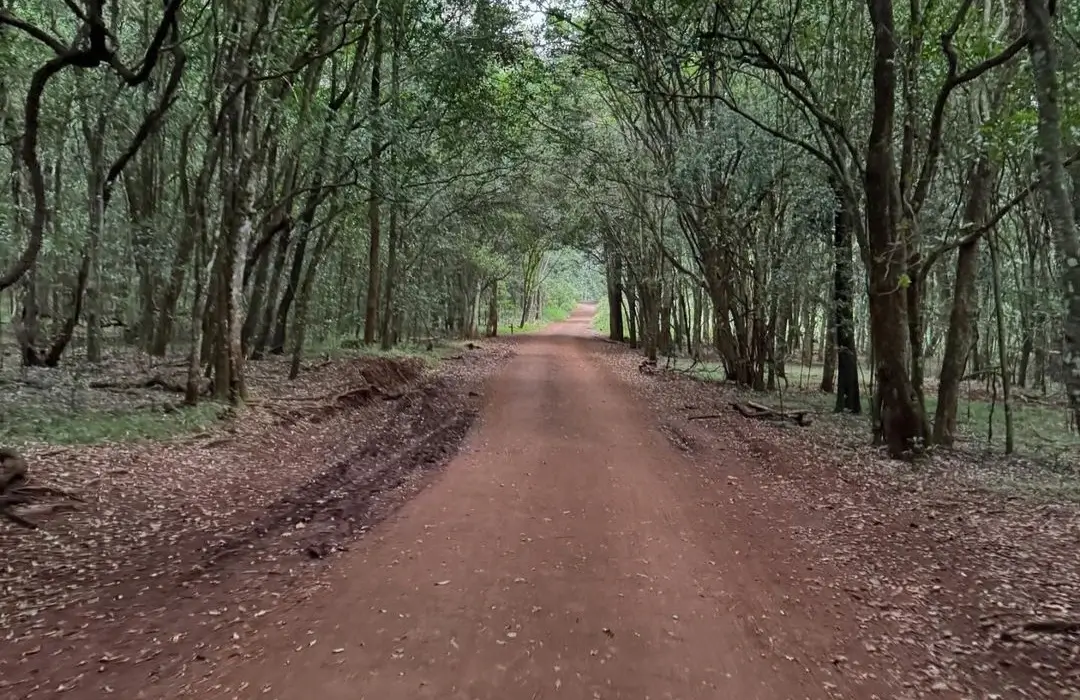
This 3.0 km loop is one of the most direct and accessible routes to the waterfall.
It is a flat, well-maintained path suitable for families and casual walkers.
The trail passes through sections of indigenous forest where Sykes' monkeys are commonly sighted.
Signage directs visitors from the loop to the waterfall viewpoint.
Other Forest Trails Leading to Karura Forest Waterfalls
- Olive Path and KFEET Track (4.1 km, Moderate): A less-frequented route with some steeper inclines, offering a more secluded experience through dense forest cover before reaching the falls.
- Family Trail and Lake Path (5.6 km, Moderate): This longer trail combines forest walking with views of Lily Lake before branching off towards the waterfall. It provides a more comprehensive tour of the forest's different habitats.
Sensory Experience at Karura Forest Waterfalls
The environment at the base of the waterfall provides a distinct sensory experience.
This is defined by the immediate physical conditions.
Sights Along the Waterfalls Trail
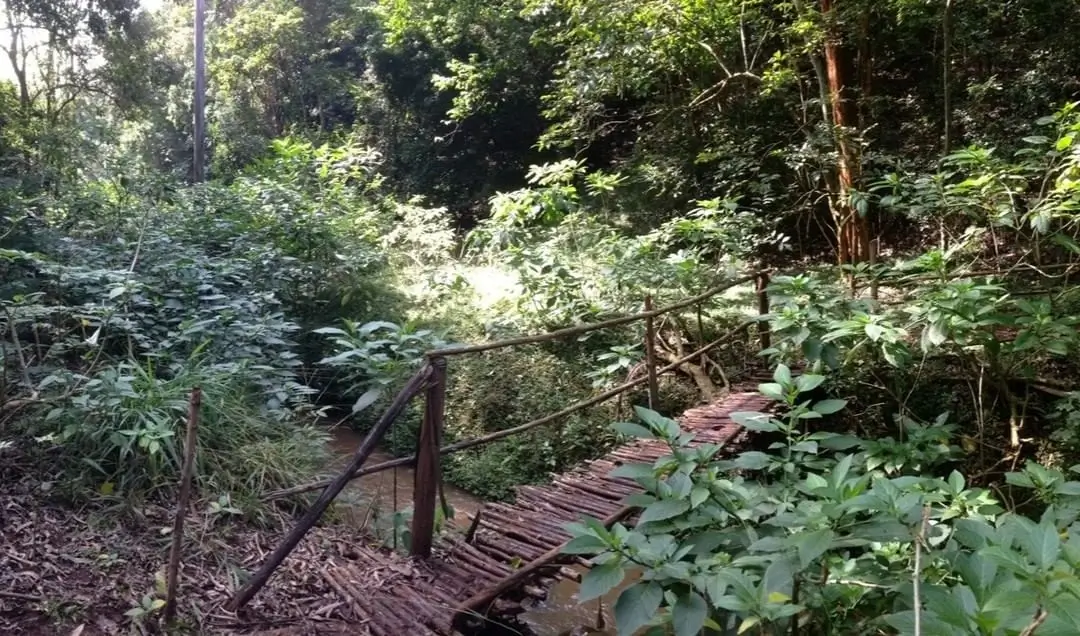
The visual environment is dominated by the movement of water over moss-covered rocks.
Sunlight filtering through the forest canopy creates dynamic light patterns on the water's surface.
During the rainy season, the high sediment load gives the water its characteristic opaque, orange colour.
Sounds of Karura Forest Nature
The primary sound is the constant acoustic energy produced by the falling water.
This sound masks more distant noises, creating a localised soundscape.
Visitors can also discern the calls of forest birds and the rustling of leaves from monkey troops in the canopy above.
Atmospheric and Tactile Conditions
The air temperature near the base of the falls is noticeably cooler.
This is due to the evaporative cooling effect of the water spray.
A fine mist is often present, which condenses on skin and surfaces.
The ground consists of damp earth and rocks that can be slippery, requiring careful footing.
Aromas of Karura Forest
The air carries the distinct smell of damp earth (geosmin) and decaying wet foliage.
This combines with the scent of fresh vegetation.
It creates an olfactory profile typical of a healthy forest floor ecosystem.
Access and Logistics for Karura Forest Waterfalls Visit
Access to Karura Forest is managed through specific, designated entry gates.
Your choice of gate depends on your starting location in Nairobi and preferred mode of transport.
Karura Forest Entry Gates
- Limuru Road Gate (Gate A): The main entrance, located opposite the Belgian Embassy. It has ample parking and provides access to the trail network leading to the waterfalls and the River Cafe.
- Muthaiga Gate (Gate C): Located on Kiambu Road, this gate is another primary entry point.
- Sigiria Gate (Gate F): Situated off Thigiri Ridge Road, this gate provides access to the western part of the forest (Sigiria Block) and its own set of trails.
Public Transport to Karura Forest
Matatus (public service vehicles) operating along Limuru Road from the city centre can drop passengers near Gate A.
For Gate C, visitors should use matatus heading towards Kiambu Town.
From the drop-off point, a short walk is required to reach the gate.
Driving and Parking Information
All main gates have secure parking available for a fee.
The fee is payable via mobile money or card and varies for different vehicle types (saloon cars, vans, buses).
Parking spaces can fill up quickly on weekends, reinforcing the recommendation to arrive early.
Supporting Karura Forest Conservation
The management of Karura Forest operates as a collaboration between a government body and a community association.
This partnership demonstrates a successful approach to urban green space conservation in Kenya.
Role of the Kenya Forest Service KFS
The Kenya Forest Service is the state corporation responsible for the management, conservation, and development of all forest resources in the country.
KFS provides the legal framework for Karura's protection and employs the forest rangers who provide security.
Friends of Karura Community Forest Association FKF
The FKF is a Community Forest Association that partners with KFS to manage the forest.
They are responsible for trail maintenance, fundraising, and infrastructure development (signage, benches).
The FKF also handles community engagement. The entry fees collected directly fund these conservation and maintenance activities.