Karuru Falls is a significant hydrological feature within the Aberdare National Park's high moorlands, comprising a three-tiered cascade with a total vertical drop of 273 metres (896 feet).
This measurement establishes it as the tallest waterfall in Kenya.
Its accessibility from the main moorland road and its position directly opposite the Gura Falls make it a primary point of interest for visitors to the park's high-altitude zone.
The Geological Formation of Karuru Falls
The Aberdare Range is a volcanic upland.
The geology of Karuru Falls directly results from this origin.
The waterfall cascades over hard, resistant layers of volcanic rock.
Differential erosion of softer rock layers, interspersed between harder strata over millennia, formed the distinct three-tiered structure.
This geological process carved the deep gorge into which the Karuru River plunges, creating the stepped profile visible today.
Hydrology and Optimal Viewing Seasons
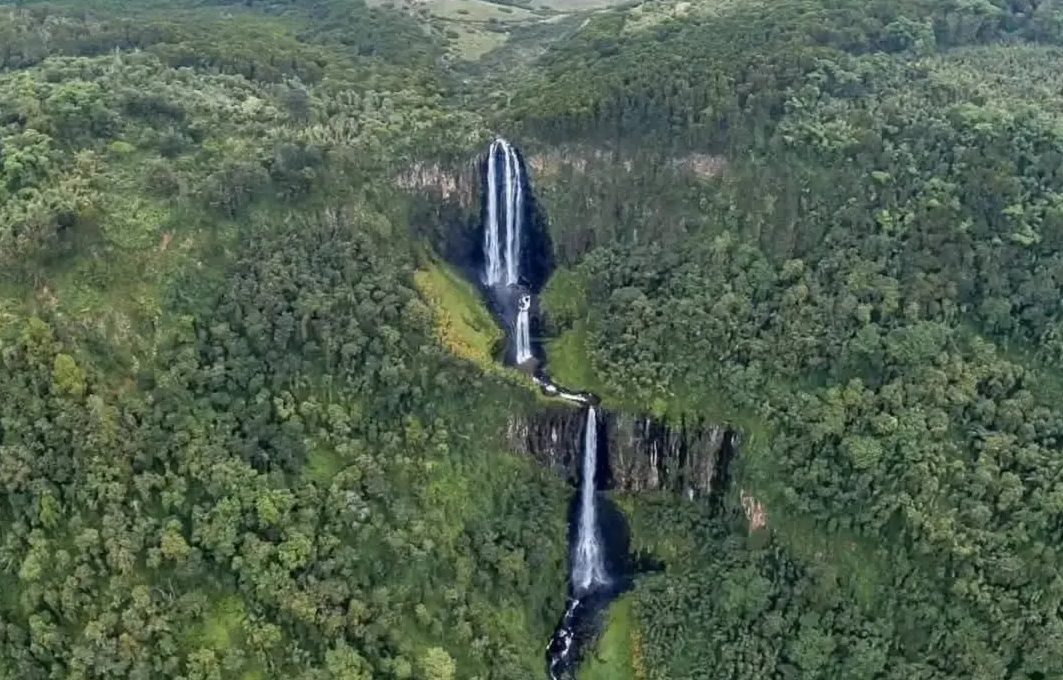
The water volume of Karuru Falls fluctuates significantly with the seasonal rains.
For the most powerful display, a visit is recommended immediately following the long rainy season, typically from late May through July.
During this period, the Karuru River is at its peak flow, creating a formidable and thunderous cascade down all three tiers.
The dry seasons, typically from January to February and June to October, offer clearer weather and more reliable road access.
Water volume is reduced during these times, yet the falls remain a substantial feature.
Increased sunlight during these months often interacts with the waterfall's mist, frequently generating rainbows within the gorge.
This presents a different but equally compelling photographic opportunity.
Mutubio Viewpoint for Viewing Karuru Falls
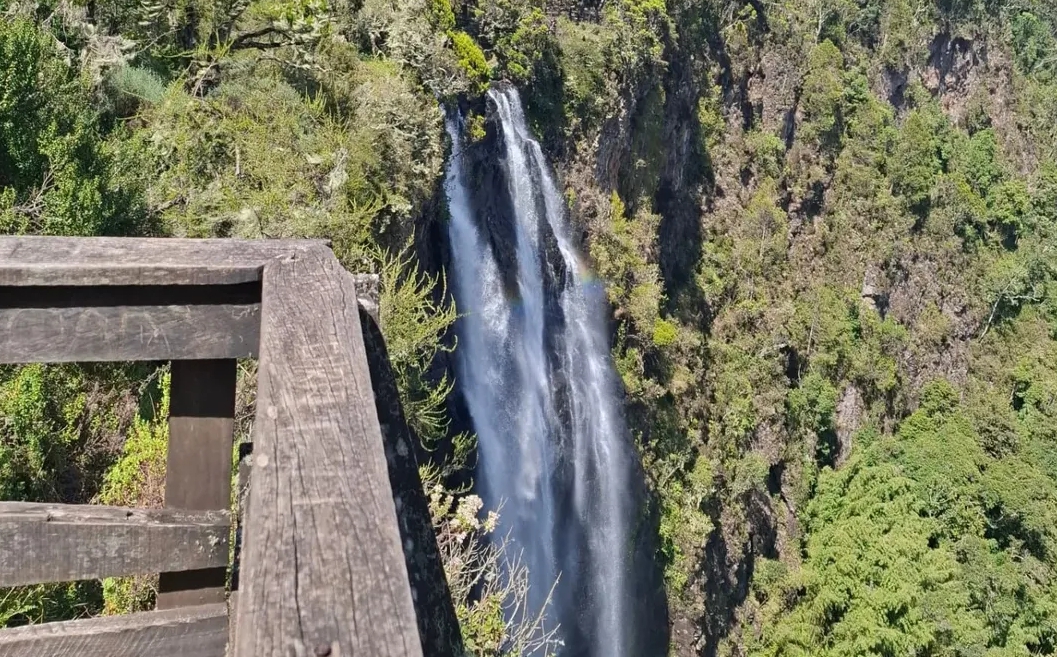
The primary and officially sanctioned method for observing Karuru Falls is from the Mutubio viewpoint.
This scenic stop is strategically located along the main moorland road loop within Aberdare National Park.
A short, clearly defined path leads from the road to the observation area.
This area offers a direct, wide-angle, and unobstructed vista of the falls across the gorge.
This viewpoint is the safest and most efficient way to experience the scale of the waterfall and the surrounding valley.
High-Altitude Flora and Fauna of the Aberdares
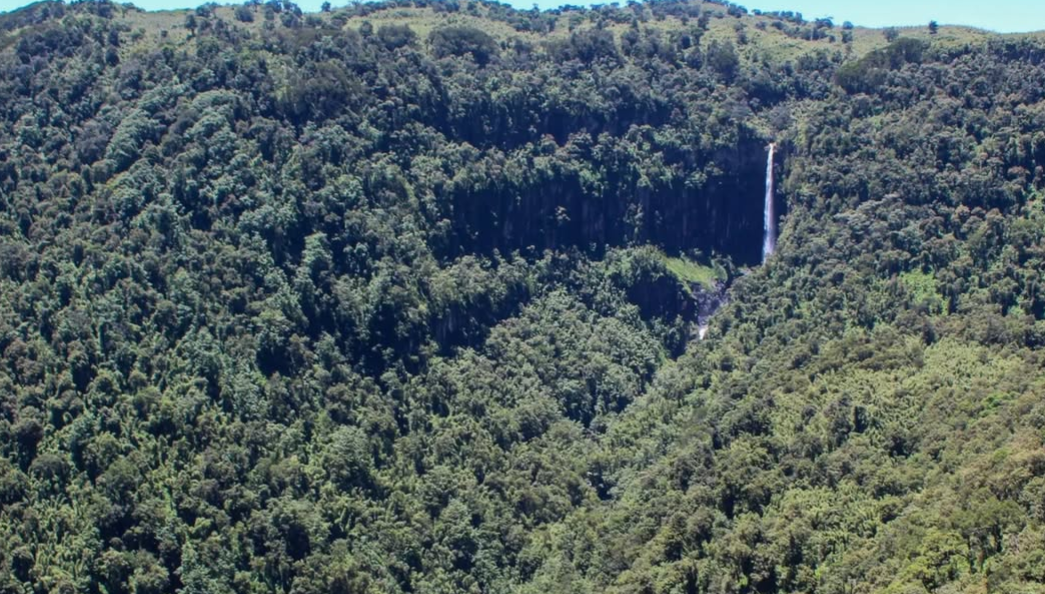
The journey to Karuru Falls traverses the unique Afro-alpine moorlands.
This ecosystem is situated above 3,000 metres (10,000 feet).
Rolling hills, tussock grasses, and a cool, often misty climate characterise this high-altitude environment.
The landscape supports distinct flora adapted to these conditions.
This includes the giant groundsel (Dendrosenecio keniodendron) and the giant lobelia (Lobelia deckenii).
Specialised fauna inhabits the moorlands.
Wildlife sightings here are less dense than in the lower Salient.
Visitors may encounter high-altitude adapted species such as duikers and eland.
The area is a critical habitat for the highly elusive Bongo antelope, though sightings are exceptionally rare.
Birdlife is distinct, with species like the Aberdare Cisticola endemic to this high-altitude environment.
Accessing the Top of the Falls
Public access to the top of Karuru Falls is not permitted via marked trails.
The terrain comprises rugged, boggy moorland with thick vegetation, making unguided treks hazardous.
For highly experienced and properly equipped mountaineers, a special guided trek can sometimes be arranged with an armed Kenya Wildlife Service (KWS) ranger.
This non-standard activity depends on ranger availability, favourable weather conditions, and a formal assessment of the group's physical fitness.
For all standard visitors, the Mutubio viewpoint remains the designated and secure method of observation.
Planning and Logistics for a Karuru Falls Visit
A visit to Karuru Falls requires logistical planning.
This primarily concerns vehicle capability and personal equipment due to the high-altitude, remote setting.
Vehicle and Park Access Requirements
Access to the Aberdare moorlands necessitates a four-wheel-drive (4x4) vehicle.
The roads leading to the viewpoint are unpaved and can become impassable for two-wheel-drive vehicles, particularly during and after rainfall.
Entry requires payment of conservation fees to the Kenya Wildlife Service (KWS) at the park gate.
It is advisable to travel during the dry seasons (January-February and June-October) for optimal road conditions.
Essential Items for Visitors
The high-altitude weather is unpredictable and cold.
Preparation is critical for safety and comfort.
- Warm Clothing: A multi-layered system is essential. Include a fleece jacket, a warm hat (beanie), and gloves. Temperatures can drop to near-freezing levels.
- Waterproof Outerwear: A windproof and waterproof jacket is mandatory to protect against sudden rain and persistent mist.
- Appropriate Footwear: Sturdy, closed-toe walking shoes or hiking boots are required, as the ground near the viewpoint can be uneven and wet.
- Provisions: No commercial facilities exist in the moorlands. Visitors must carry all necessary drinking water and food.
- Optical Equipment: A camera is essential for documentation. Binoculars are highly recommended for observing the falls in detail and for potential wildlife spotting across the valleys.
2026 Aberdare National Park Conservation Fees
As a KWS Premium Park, entry to Aberdare National Park to visit Karuru Falls is subject to the following 2026 conservation fee structure.
Fees are charged per person for a 24-hour period.
| Category | Non-Resident (USD) | East African Resident (KES) | Kenyan Citizen (KES) |
|---|---|---|---|
| Adult | $90 | KES 1,500 | KES 1,000 |
| Child/Student | $40 | KES 750 | KES 500 |
Note: Rates are subject to change by Kenya Wildlife Service.
It is advised to verify current fees on the official KWS portal before travel.
Standard vehicle entry fees also apply.
Book a Trip to Karuru Falls (Aberdares)
Include Karuru Falls (Aberdares) in your personalized Kenya safari itinerary and create unforgettable memories.
Plan My SafariMore Attractions
Chania Falls (Aberdares)
Serene waterfalls cascading over rocky l...
Buffalo Springs (Buffalo Springs NR)
Life-giving natural springs in the arid...
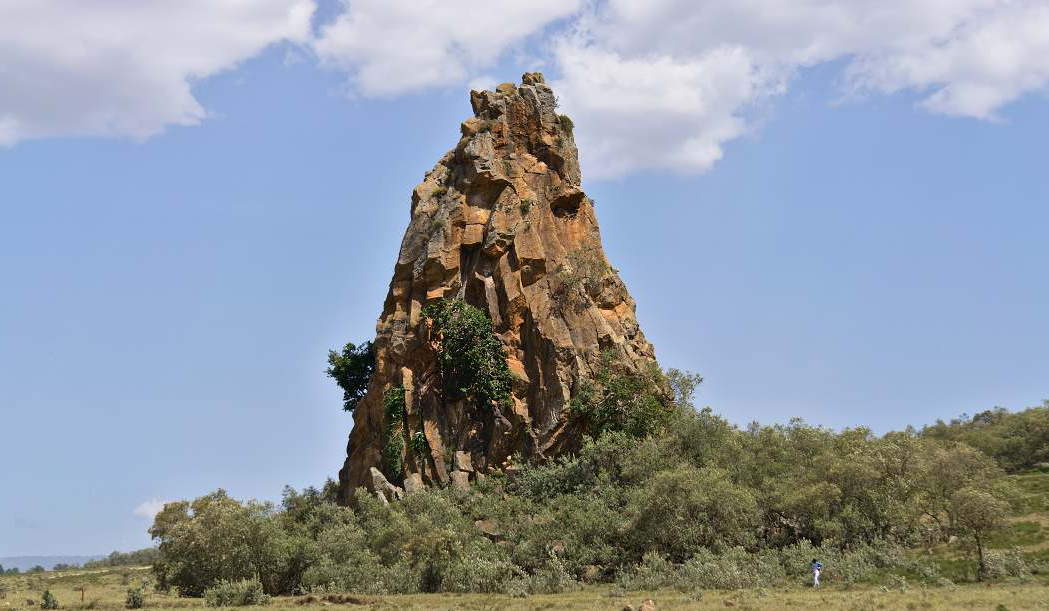
Fischer's Tower (Hell's Gate NP)
Iconic volcanic plug popular for rock cl...
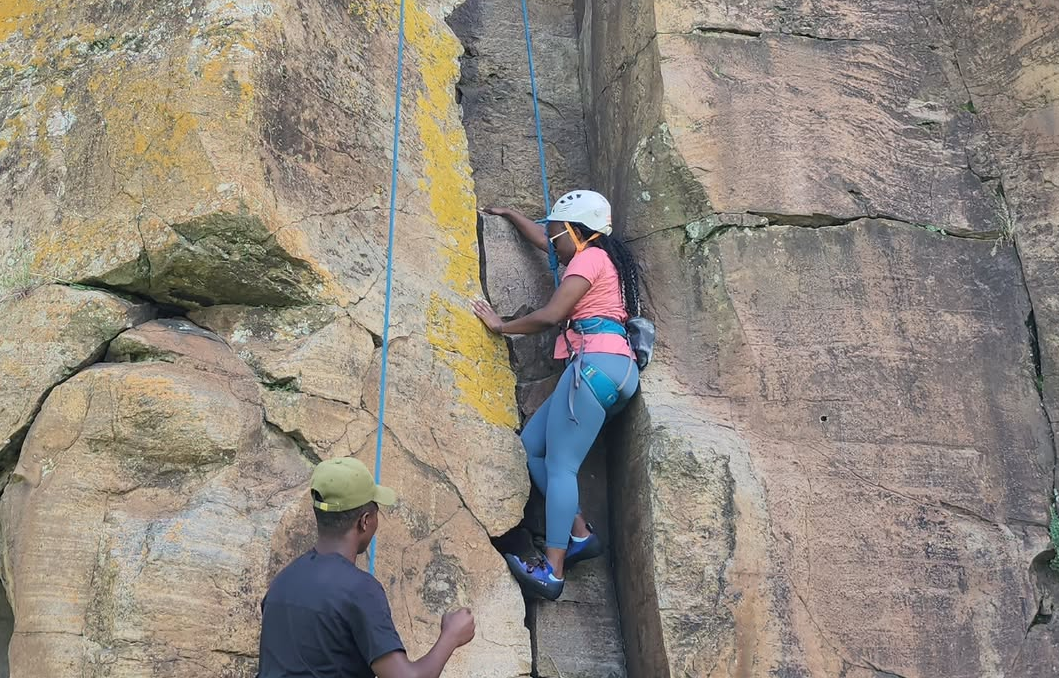
Central Tower (Hell's Gate NP)
Impressive rock tower offering climbing...
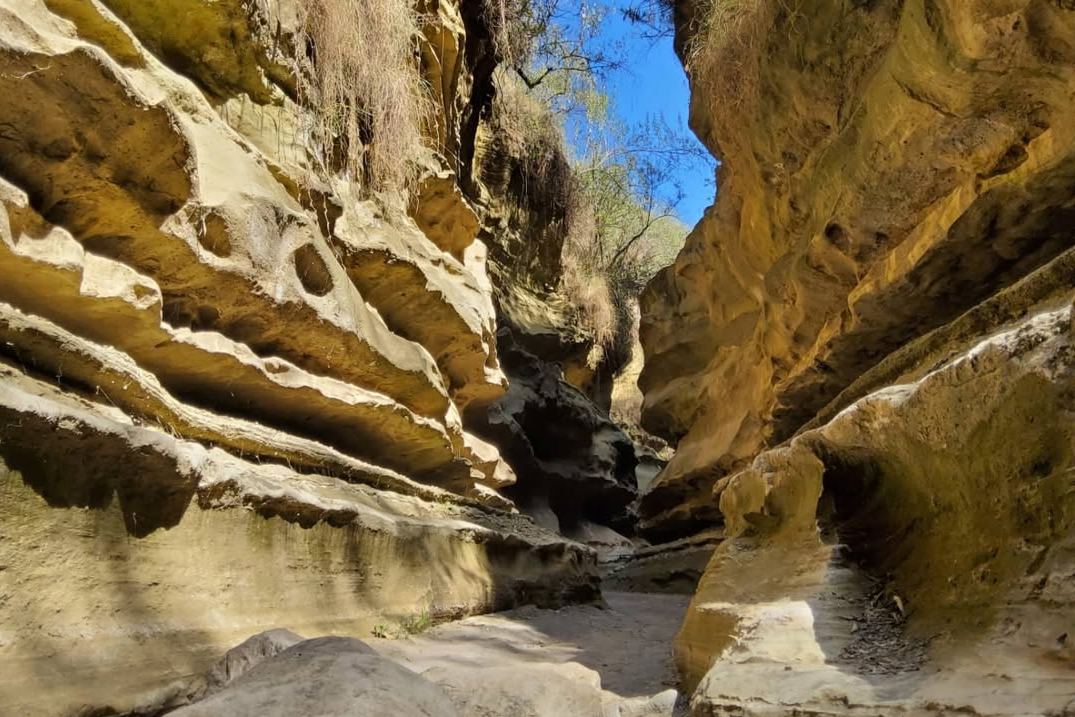
Ol Njorowa Gorge (Hell's Gate NP)
Dramatic gorge carved by ancient water f...
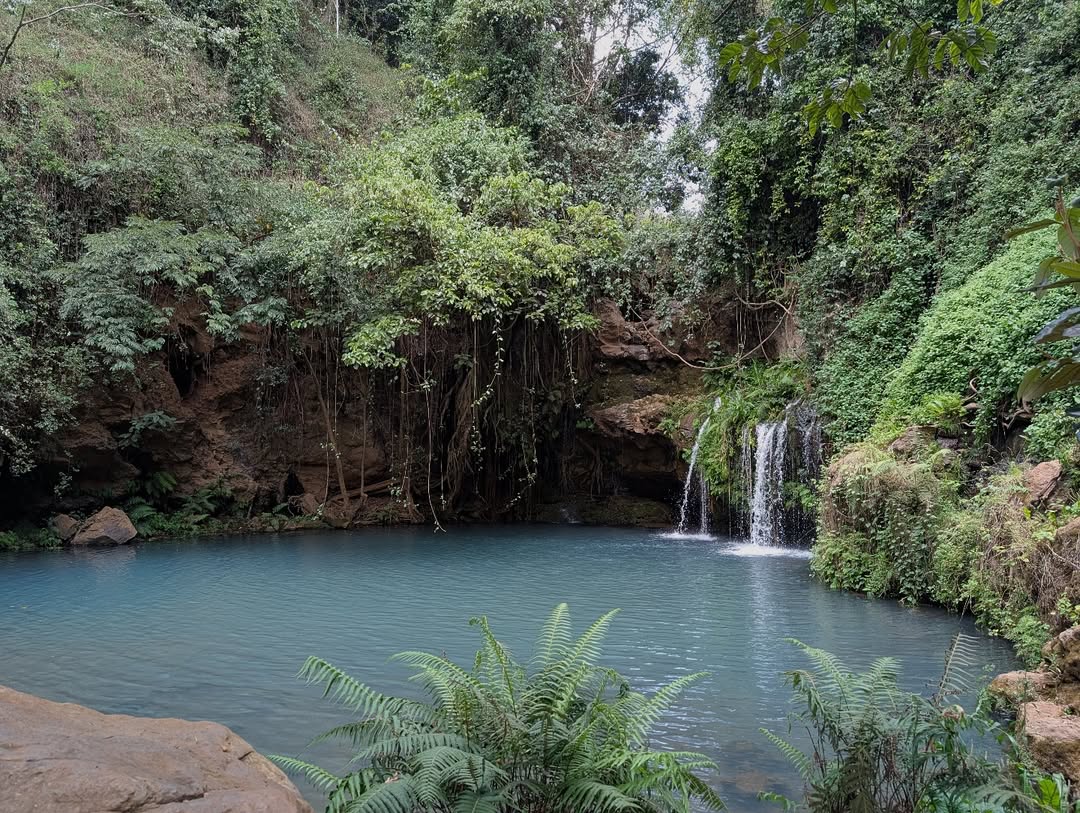
Ngare Ndare Forest
Thrilling canopy walk and pristine blue...